03 · WATERPROOFING · MALVERN
Wet area waterproofing in Malvern, cured before tiling starts
Primer, bond breakers at every junction, sealed detailing around the waste, two coats built to thickness — then time, before a bed of adhesive touches any of it.
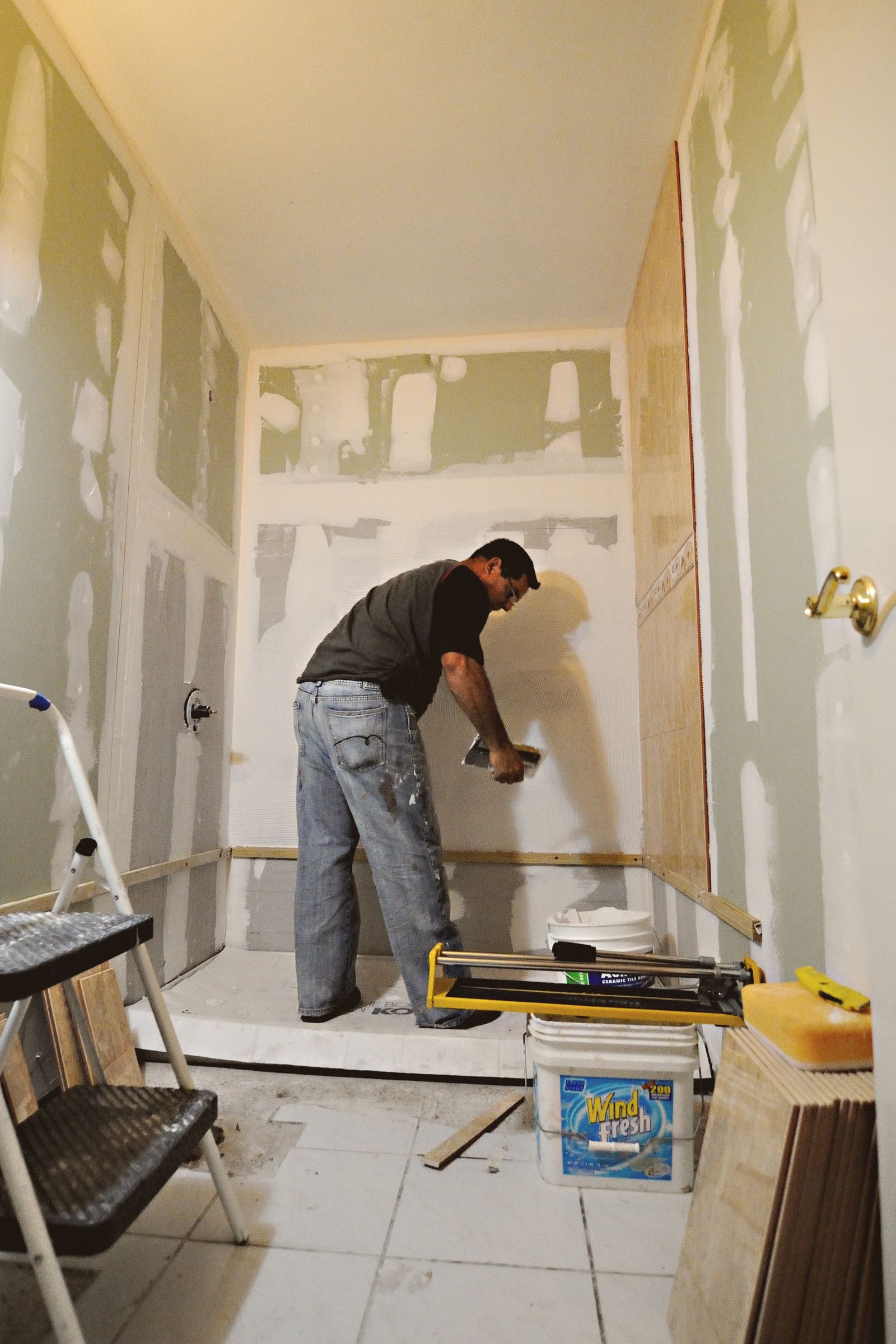
Tiling a bathroom wall, a stage that starts only once the membrane has cured.
SUBSTRATE · SCOPE
Bathrooms, ensuites, laundries and balconies across Malvern, Malvern East, Armadale, Toorak, Glen Iris and Prahran. Residential and small commercial wet areas treated the same way.
What a wet area system actually is
Waterproofing is not a coat of paint on a bathroom floor. It is a system with an order to it: a substrate that is sound, dry and free of dust; a primer so a porous screed does not drink the membrane out of its own film; flexible bond breakers where the floor meets the wall and at every internal corner; sealed detailing around the floor waste, tap penetrations and screen fixings; then two coats built to the thickness the membrane calls for, and left to cure.
Every one of those steps is invisible by the time you stand in the finished room. That is precisely why they get compressed on a tight program — and why a shower that fails two winters later almost never fails at the tile.
MEMBRANE · IN ORDER
The membrane stage, step by step
Read down the list the way the wall is built up.
01 · SUBSTRATE
Check and correct
Sheeting fixings, screed falls and any soft or contaminated patch are dealt with first. A membrane cannot flatten a floor or hold a loose sheet down.
02 · PRIMER
Seal the surface
Primer stops a thirsty screed pulling water out of the first coat and leaving it thin. It also binds down the last of the dust that would otherwise sit under the film.
03 · JUNCTIONS
Bond breakers and corners
Floor-to-wall junctions and internal corners move, so the membrane is detailed to move with them rather than being stretched tight across the change of plane.
04 · PENETRATIONS
Waste, taps, fixings
The floor waste is where the water is meant to go, which makes it the point most worth the extra half hour. Tap sets and screen fixings get the same attention.
05 · COATS
Two coats, built to thickness
Coats are run in opposite directions so thin spots in one are covered by the next. Thickness, not appearance, is what makes a membrane a membrane.
06 · CURE
Leave it alone
The room stays empty while the membrane cures. Nothing is stacked on it, and no adhesive goes down until it has genuinely gone off.
0 mm · SURFACE
The only layer you pay for twice is the one you cannot see
Water that gets past a membrane does not announce itself at the shower. It travels along the screed and reappears somewhere else — a musty smell that never quite clears, skirting lifting in the hallway, a dark line at the edge of the carpet in the next room, paint bubbling on the other side of the wall.
By the time it shows, the repair is rarely a tube of silicone. That is the honest argument for spending the time at membrane stage: it is the cheapest day in the whole job, and the most expensive one to skip.
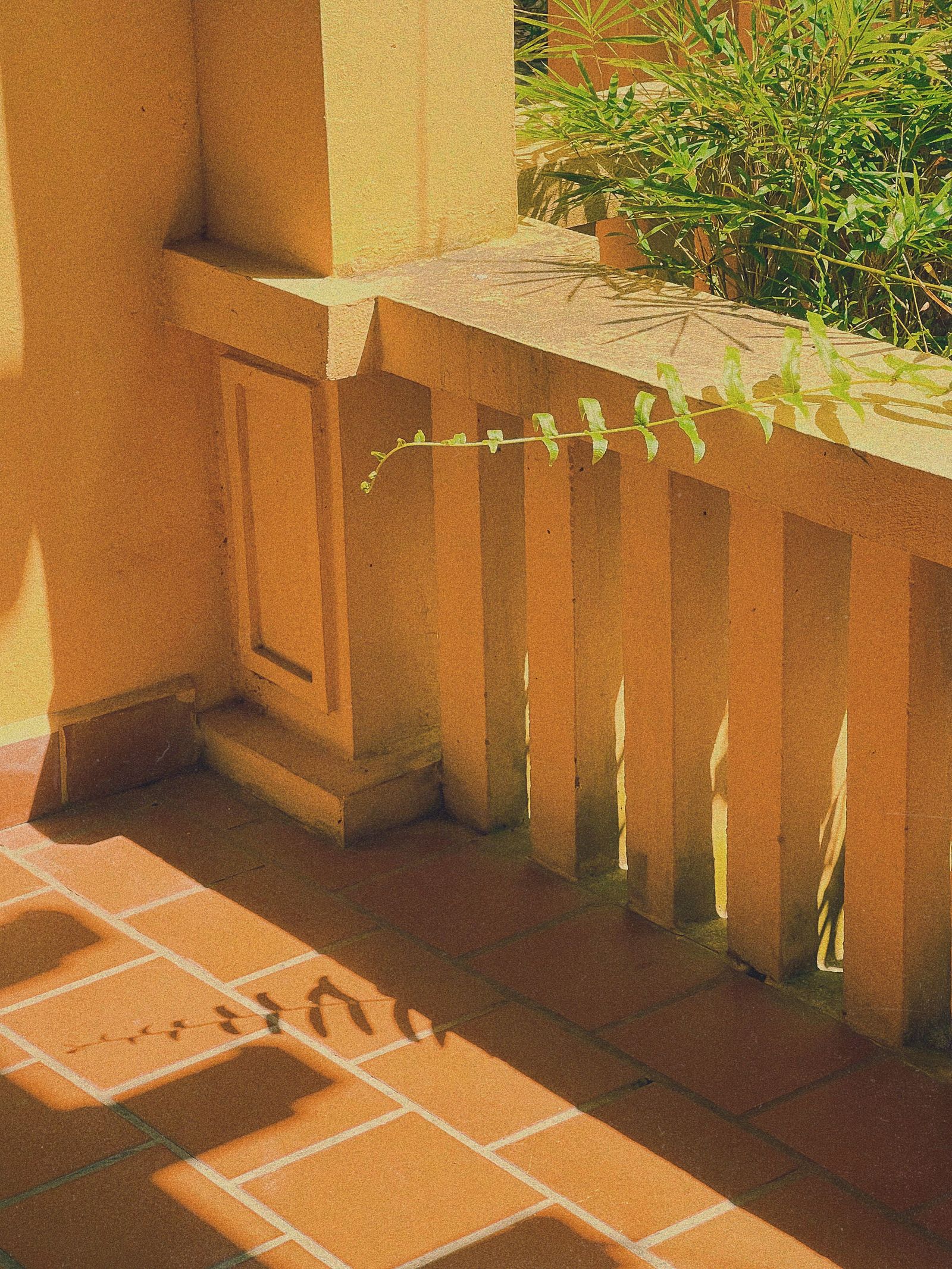
Reference photograph: an exposed balcony, where the membrane also has to handle sun, thermal movement and a drainage fall.
OUTSIDE · EXTERNAL MEMBRANE
Outside, the membrane works harder
An external deck has to shed water rather than merely contain it, so falls, perimeter detailing and drainage are decided before anything is coated. The membrane itself is chosen for exposure — temperature swings, UV on the edges, and movement in the structure underneath.
QUESTIONS · MEMBRANE
Asked before we start
How many coats does a wet area get?
Two, run in opposite directions, with the corners, junctions and waste detailed before the first full coat goes on. What matters is the built thickness of the film, not how even it looks once it dries.
How long does it need to cure?
That depends on the membrane, the temperature and how much air is moving through the room. It is measured in hours and sometimes days, and it is checked on the day rather than assumed from a schedule.
Why can't tiling start the same day?
Adhesive spread over a membrane that is still soft will mark it, trap moisture underneath and compromise the bond above it. The day saved there is the day that gets spent opening the floor up later.
Can a bathroom be waterproofed over existing tiles?
Sometimes, where the existing tiles are sound, well adhered and the junctions can be detailed properly. Often the more useful answer is that the tiles are covering the actual problem. We look at the substrate and the history of the leak before recommending either route.
NEXT LAYER · TILE