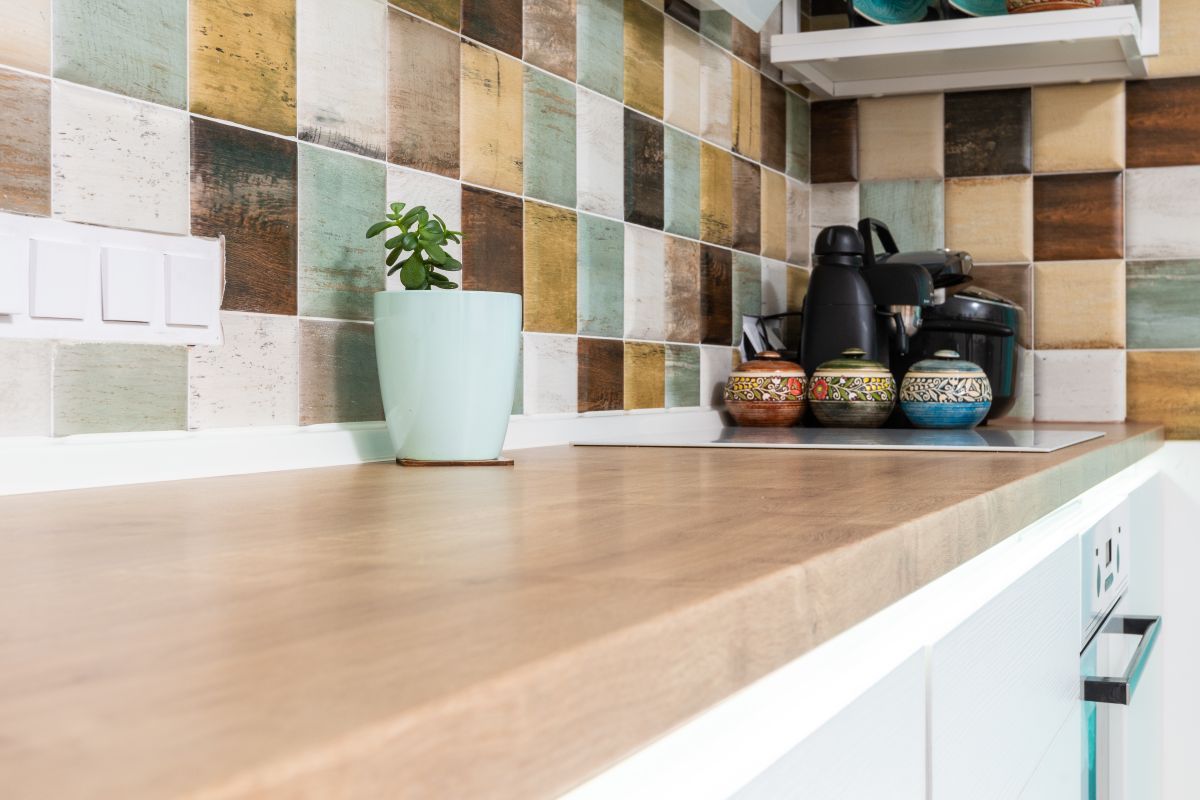
REFERENCE PHOTOGRAPH · RUSTIC-EFFECT WALL TILES ON A KITCHEN SPLASHBACK
GUIDE · 0 MM · THE TILE ITSELF
Porcelain vs ceramic: choosing by room, not by label
On a showroom board, porcelain and ceramic can look the same. On a shower floor or an open balcony they behave very differently. This guide compares them one property at a time, then room by room, so the job decides which tile you pick.
For homes and small commercial spaces in Malvern and the suburbs around it.
SUBSTRATE OF THE TILE · BODY
Both are fired clay. The difference is in the body.
Ceramic and porcelain tiles are made from similar raw materials. Porcelain uses a finer, denser mix fired at a higher temperature, so the finished body has very little open porosity. Ceramic is fired cooler and stays more porous. That makes it lighter and easier to work, but it takes on more water. Neither one is better across the board. The right choice depends on where the tile goes, what it’s laid over and how much water, foot traffic and weather it will face.
The glaze colour and print tell you very little about the body underneath. Before you commit, check the manufacturer’s technical sheet for water absorption and intended use.
Porcelain and ceramic, side by side
COMPARISON · SIX PROPERTIES
In a wet area, neither tile is the waterproofing. The membrane underneath does that job.
Porcelain
Very low. Porcelain is generally classed at 0.5 per cent absorption or less, which makes it the safer choice for floors that get wet and for anywhere exposed to weather.
DENSITY AND HARDNESS
Dense and hard-wearing. It suits kitchens, hallways and small commercial floors with steady foot traffic.
SURFACE FINISH
Comes glazed, matt, polished or through-body, including textured outdoor surfaces. Polished faces can be slippery when wet, and some need sealing.
CUTTING AND DRILLING
Harder to cut cleanly. It needs a wet saw or a good scoring cutter, diamond bits for pipe holes and extra care around cut-outs.
COST
Usually costs more to buy. Slower cutting and stronger adhesives add labour, especially with large formats.
WHERE IT SUITS
Floors, shower bases, wet-area walls, balconies, outdoor areas and large format work.
Ceramic
Higher, and often much higher than porcelain, especially in glazed wall tiles. The glaze sheds water, but the body behind it doesn’t.
DENSITY AND HARDNESS
Softer and lighter. Excellent on walls, but less forgiving on busy floors or where heavy pans get dropped.
SURFACE FINISH
Almost always glazed, with the widest choice of colour, gloss and handmade-look edges. A chip shows the paler body underneath.
CUTTING AND DRILLING
Cuts and drills easily. That makes it a good fit for detailed splashbacks, niches and walls with lots of pipe holes.
COST
Generally cheaper to buy and quicker to cut. Still, once preparation and waterproofing are counted, the tiles themselves are only one part of the job.
WHERE IT SUITS
Walls, splashbacks, and wet-area walls over a properly installed membrane. Only floor-rated ceramic should go on a floor.
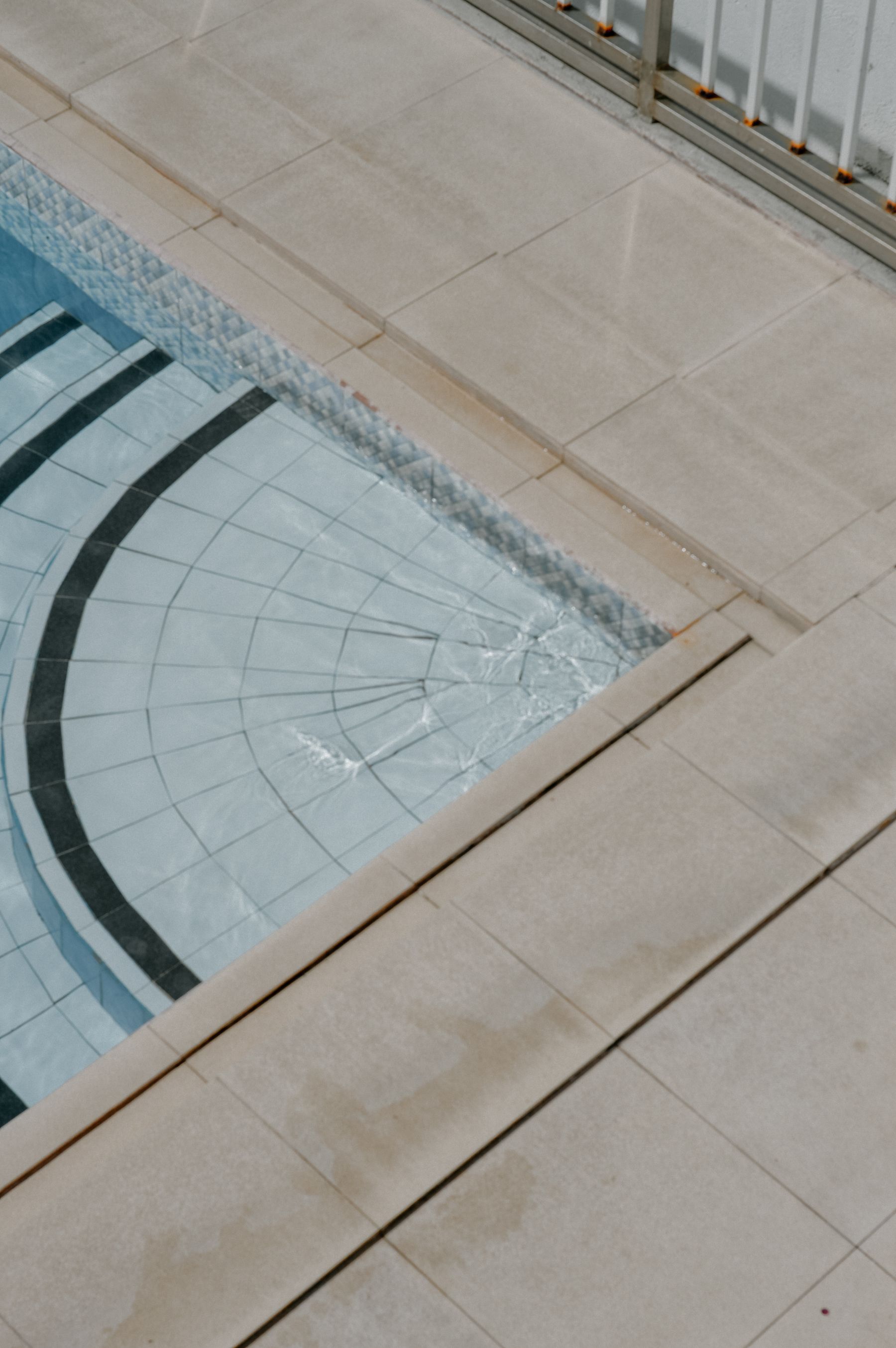
REFERENCE PHOTOGRAPH · POOL SURROUND IN SUN AND STANDING WATER, WHERE A DENSE, LOW-ABSORPTION BODY EARNS ITS PLACE
SUMMARY · ROOM BY ROOM
Which tile, where
Walls carry little load and stay mostly dry. Floors, showers and outdoor areas have to handle weight, water and weather. That split decides most choices.
01 · VERTICAL
Walls and splashbacks
02 · WET AREA
Bathroom floors and showers
03 · TRAFFIC
Living areas and hallways
04 · WEATHER
Balconies and outside
EDGE + JOINT
A note on rectified edges and joint width
A rectified tile has its edges ground square after firing, so every piece comes out closer to the same size. That allows a narrower grout joint and the crisp, almost seamless look many people want, especially with porcelain. Non-rectified tiles keep their pressed edges and vary slightly in size, so they need a wider joint to take up the difference.
NEXT · SERVICES AND GUIDES
Where this choice gets made
Bathroom Tiling
Outdoor Tiling
Large Format Tiling
GUIDE Large Format Tiles: Fewer Joints, Higher Demands
GUIDE Choosing Outdoor Tiles for Melbourne Conditions