10 · TILE REPAIRS · MALVERN
Cracked, drummy or loose — the tile tells you why
Individual tiles and small sections repaired across Malvern, Malvern East, Armadale, Glen Iris, Prahran and Carnegie. The cause gets read before anything is lifted, because a repair over an unresolved cause comes back.
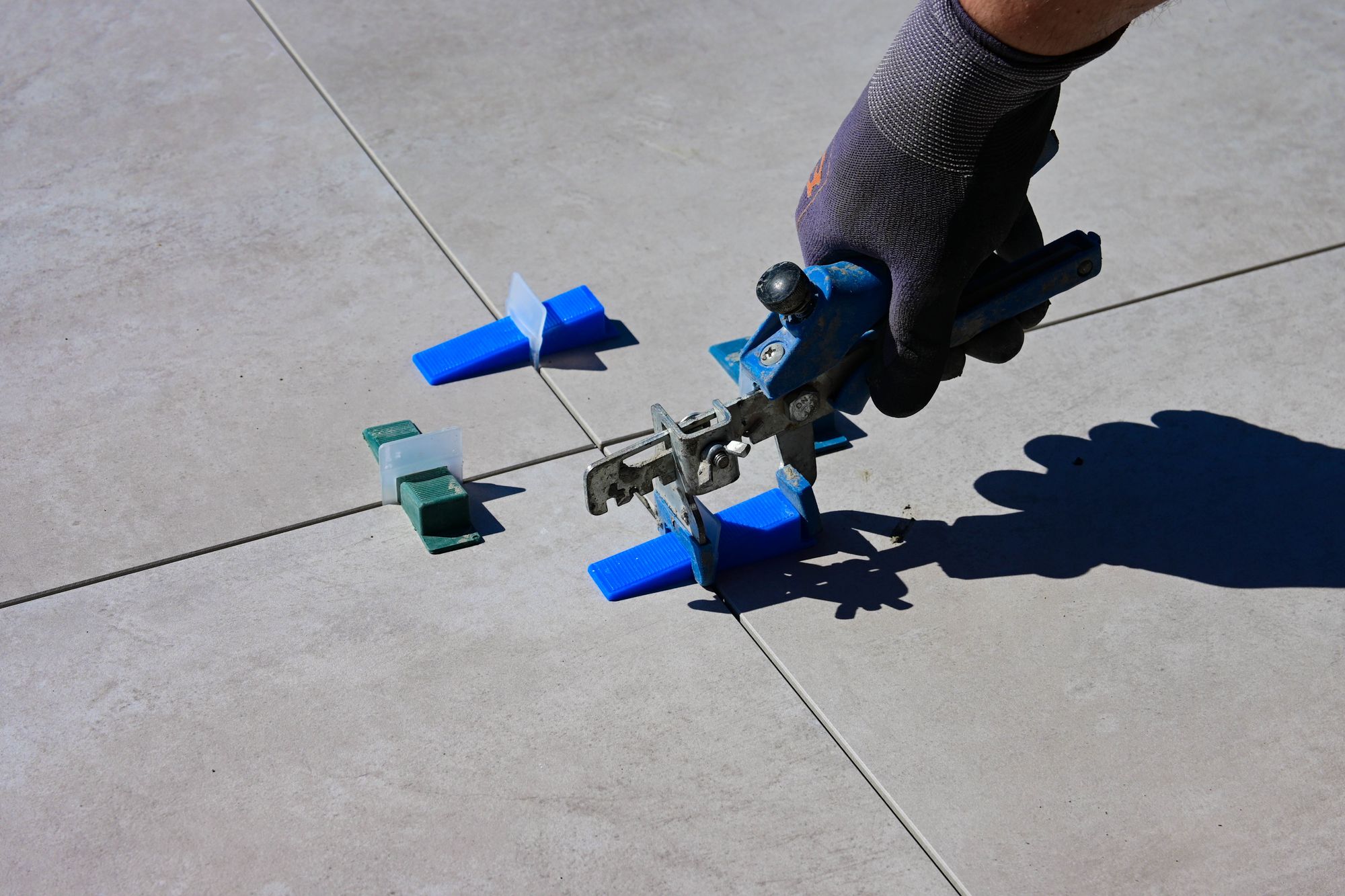
REFERENCE · A TILE SCORED WITH A MANUAL CUTTER, LEVELLING CLIPS AND SPACERS BESIDE IT
0 mm · SURFACE
What gets repaired
Drummy tiles that sound hollow underfoot
Loose and lifting tiles at doorways and thresholds
Chipped edges and broken corners
Earlier spot repairs that failed
Damage around floor wastes and screed falls
Grout and silicone re-made after the repair
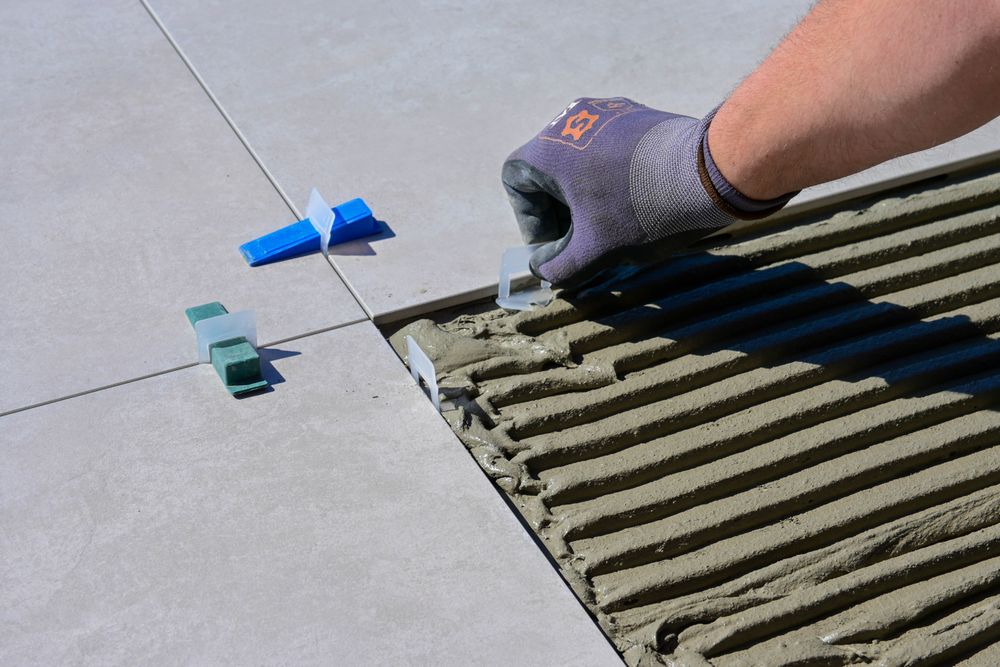
A TILE SET OVER FRESHLY COMBED ADHESIVE — THE BED A RE-BEDDED TILE NEEDS
SUBSTRATE · READING THE CAUSE
Diagnosis comes before anything is lifted
A tile rarely fails on its own. Tapping across the field maps how far the hollow area actually runs — it is almost always larger than the one tile that caught your attention. Crack patterns are read next: a straight line travelling through several tiles in a row is following movement underneath, while a star break radiating from a single point is impact damage and stops there.
LEAST INVASIVE FIRST
Each option is weighed before the next, more disruptive one is considered.
Repair options, in the order they are considered
LIFT
Lift and re-bed
A drummy tile is cut out at the joint and lifted intact where the glaze allows it. Old adhesive is ground back to a sound bed, fresh adhesive is combed and notched to suit the tile, and the tile is set flush with its neighbours rather than proud of them.
MATCH
Colour-matched replacement
Leftover boxes in the garage are the first and best source. Without spares, a current range is matched on size, finish and tone, and the closest match is placed where the eye lands least — under a vanity, behind a door swing, at the edge of a run rather than mid-floor.
PATCH
Chip and edge patching
Where a tile is otherwise sound and lifting it would risk cracking three more, a chipped corner or edge is filled and tinted to the body and glaze colour. It is a cosmetic fix, and it is described as one.
JOINTS
Grout and silicone re-established
MEMBRANE
Where water is involved
THE HONEST PART
Spot repair, or relay the section
A SPOT REPAIR MAKES SENSE WHEN
Tapping finds sound adhesive all around it
Spare tiles exist, or the range is still current
Grout colour across the area is even
Nothing points to water behind the tile
A SECTION RELAY IS THE BETTER CALL WHEN
Cracks track a line through several tiles
The substrate moves, flexes or was never levelled
No match exists and mismatch would read badly
Falls or waterproofing need correcting anyway
QUESTIONS ABOUT REPAIRS
Three things people ask first
Can you find a tile to match one laid years ago?
Sometimes. Ranges are discontinued and shade batches drift even within a range, so the honest answer depends on the tile. Check the garage, the laundry cupboard and under the house for spares first — a single leftover tile changes the whole conversation.
Can one tile be replaced in the middle of a floor?
Yes, and it is careful work. The grout line is cut out first so the surrounding tiles are isolated, then the damaged tile is broken inward rather than levered up, which protects its neighbours. The bed is cleaned back, the new tile is set flush, and the joints are re-made.
Why do cracks come back after a repair?
NEXT
Describe what has moved, and where
How many tiles are affected, whether they sound hollow, roughly when the area was tiled and what sits underneath — that is usually enough to narrow the cause before anyone stands on the floor.
RELATED WORK AND READING
Floor Tiling — relaying a section on a corrected substrate
Balcony Tiling — falls, drainage and external membranes
Leaking Shower Repairs — when water is behind the movement
Preparation Decides the Finish
All tiling services