05 · FLOOR TILING · MALVERN
Floor tiling in Malvern, levelled first and tiled second
Living areas, hallways, kitchens, laundries and entries. The substrate is checked and corrected before a single sheet of adhesive is combed out.
SUBSTRATE · LEVELLING
A floor is only as flat as what sits under it
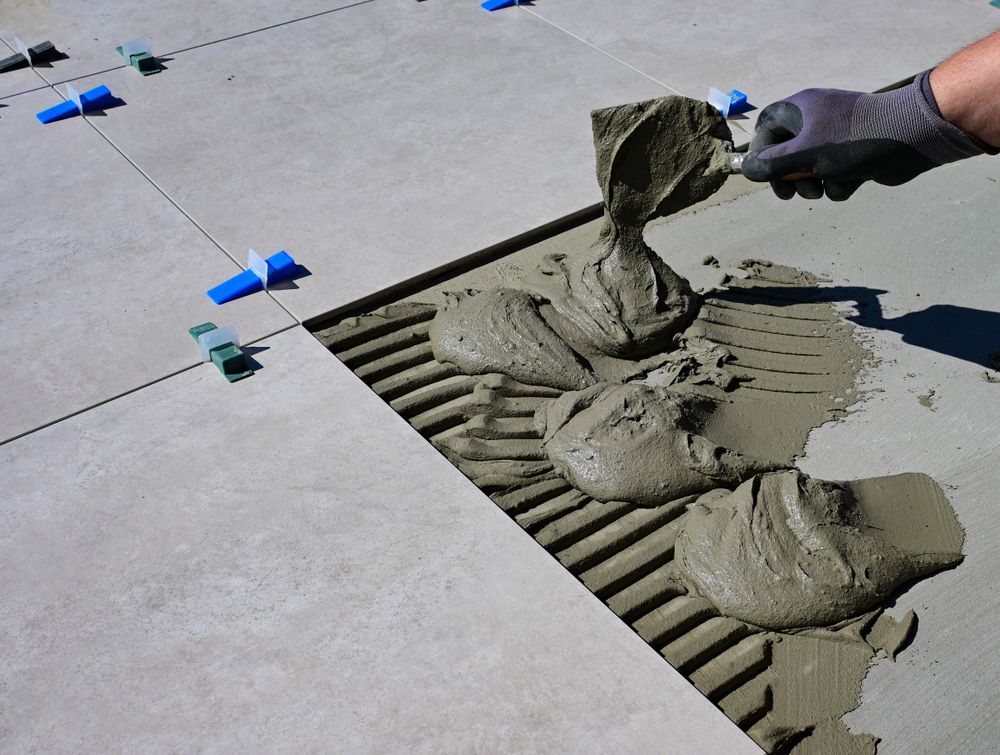
Flatness is settled before a tile is unwrapped. We run a straight-edge across the room, mark the hollows and the high spots, then correct them with levelling compound or a screed — because a tile sits exactly as flat as the bed beneath it, and nothing done during laying will hide a slab that dips towards a doorway.
SUBSTRATE
Two substrates, two different sets of problems
Most floors in Malvern and the surrounding streets are one of two things: a concrete slab, or timber and particleboard over joists. The preparation diverges completely.
Concrete and screed
Slabs shrink and move for a long while after pour, and older ones carry patches, paint, glue residue and levels that drift. We check the surface for bond and moisture, grind back anything adhesive will not hold to, prime, and fill the low points rather than raise the whole floor where the levels allow it.
Timber and particleboard
DEPTH REGISTER
The build-up, bottom to top
SLAB · SHEET
The floor you already have
Sounded for drumminess, straight-edged for level, checked for movement and moisture. Everything above this layer is chosen by what the check finds.
LEVELLING
Compound and screed
PRIMER
The coat nobody sees
ADHESIVE BED
Adhesive and set-out
Adhesive matched to both the substrate and the tile, combed for full coverage and back-buttered on bigger panels. The set-out is planned from the main sightline down the hall, not from whichever wall happens to be squarest, so cuts land where they are least seen.
JOINT
Grout, perimeters and movement
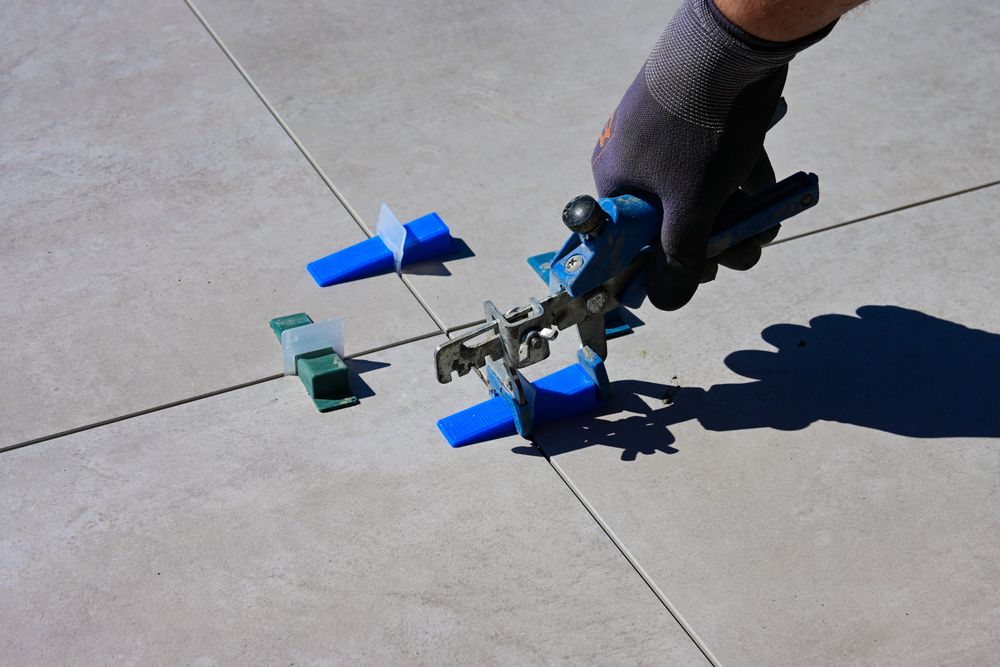
Reference photograph: a cut being scored on a manual tile cutter. On a floor, the set-out starts from the main sightline, so the cut pieces are pushed to the edges and doorways where they are least seen.
ASKED BEFORE WE START
Four questions that change the quote
Can you tile over the existing floor tiles?
Sometimes. The old floor has to be sound, well bonded and reasonably flat. Anything drummy comes up first, and the surface is ground and primed so the new adhesive has something to key into. It saves demolition — and it raises the floor, which leads to the next question.
What about door clearances and floor height?
Sheeting, levelling, adhesive and tile all add build-up, so doors, thresholds, wardrobe tracks and the junction with carpet or boards are measured before we price the job. Doors can usually be trimmed, and a trim strip handles the change in level at the doorway.
Can you tile over underfloor heating?
Yes, over electric mats or hydronic loops, using a flexible adhesive and grout with the heating left off until everything has cured. Mention it early — it affects the bed, the grout and occasionally the set-out.
How long before we can walk on it?
Adhesive and grout both need curing time before load, and how long depends on the products, the tile and the weather. We set out which rooms to stay off and for how long on your job, and heavy furniture goes back last.
Tell us what is under the floor
CONTINUES INTO