11 · LEAKING SHOWER REPAIRS · MALVERN
A leaking shower is a diagnosis before it is a repair
Water almost never escapes where the stain shows up. Before anything is sealed, the shower is read from the outside in — joints, junction, waste, hob — so the fix matches the fault instead of covering it.
Shower leak investigation and repair for homes and small commercial bathrooms in Malvern, Malvern East, Armadale, Toorak, Prahran and South Yarra.
WHERE THE FAULT CAN SIT
Grout joints and silicone at the corners, screen and floor
6 MM · BED
Adhesive and screed holding water that has nowhere to drain
SUBSTRATE · MEMBRANE
The floor-wall junction, the waste flange and the hob — where a membrane either continues or stops

A floor waste and the joints around it, one of the junctions checked when a shower leaks.
DIAGNOSIS
Grout was never the waterproofing
Cement grout takes on water by design. The membrane underneath is what stops it, which is why a sound-looking shower can still be wetting the wall behind it.
Water moves through the joints, into the bed, and then along whatever surface will carry it. If the membrane is continuous and properly detailed, that water finds the waste and leaves. If it stops short at the floor-wall junction, dies out at the waste flange, or was never turned up over the hob, the same water travels into the frame, the screed or the slab edge instead.
That gives two broadly different faults. Surface failure — cracked grout, split or mouldy silicone, a gap at the screen fixing — lets more water in than the system can shed, and shows up gradually. Waterproofing failure lets water out of the wet area altogether, and tends to show as damage outside the shower even when the tiling looks fine.
SYMPTOMS
What people notice first
Most of these appear outside the bathroom, which is why a shower can leak for a long time before anyone connects the two.
Skirting boards lifting or blistering in the adjoining room
A door frame or architrave swelling near the floor
Paint bubbling on the wall shared with the shower
Tiles sounding hollow near the waste or the hob
Silicone peeling back, darkening or splitting at the junction
Grout washing out or staying wet well after use
SCOPE · ASCENDING
The repair ladder
Work starts at the lowest rung that can honestly solve the fault. Scope can change once tiles come off and the substrate is visible — that is said before the job starts, not after.
01 · SURFACE
Regrout and reseal
02 · JUNCTION
Targeted membrane repair
03 · REBUILD
Strip out and start again
BEFORE WE START
Questions about leaking showers
How is a shower actually tested?
By elimination. The screen, the joints and the base are wetted separately so the source can be narrowed, the waste is checked for a sound connection, and adjoining surfaces are inspected for where moisture is actually arriving. Nothing is sealed until the pattern makes sense.
Can the shower be used during repairs?
No. Grout and silicone need to cure dry, and membranes need their full cure before water touches them. The shower stays out of use for the repair and the cure that follows it — the period depends on the products used and the conditions on the day, and it is set out before work starts.
Why do sealants on their own often fail?
Because they are applied to the face of a system that is leaking behind them. A surface coating over saturated grout traps water in the bed, and silicone run over a moving junction that was never bond-broken will split again. Sealing helps when the joints are the fault; it does not replace a membrane.
Will replacement tiles match?
Where spares exist, yes. Where they do not, the closest current match is sourced and placed so the change reads as little as possible — often low on a wall or behind the screen. On older bathrooms this is worth discussing before tiles come off.
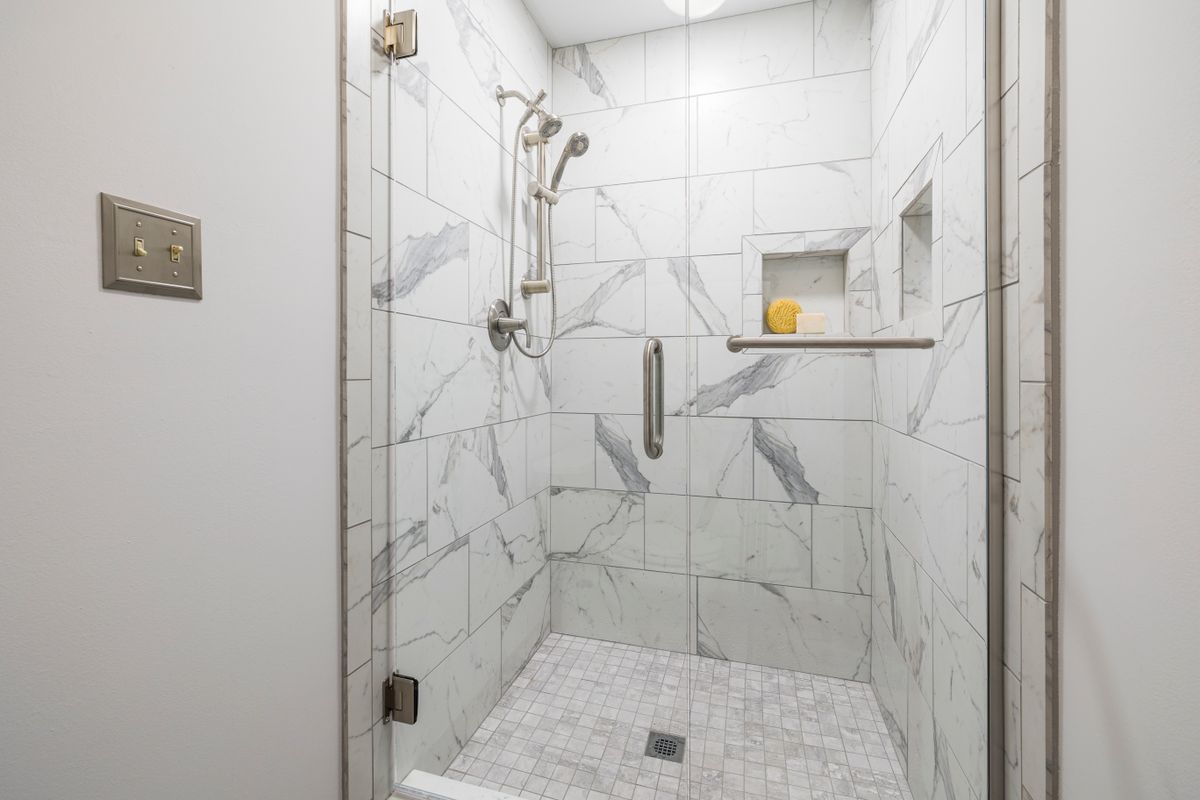
Reference photo — the finish a dry wet area is able to hold.
NEXT
Describe what you are seeing
RELATED SERVICES
FURTHER READING