GUIDE · EXTERIOR · SURFACE TO FALLS
Choosing outdoor tiles for Melbourne conditions
An outdoor tile works harder than any floor inside the house. It gets hot northern sun, cold nights, sudden downpours, pool water and furniture dragged across it. How it looks in the showroom matters far less than how it grips when wet, how it copes with heat and where the water goes after it lands.
A selection guide for patios, pool surrounds, balconies and steps in Malvern and neighbouring suburbs.
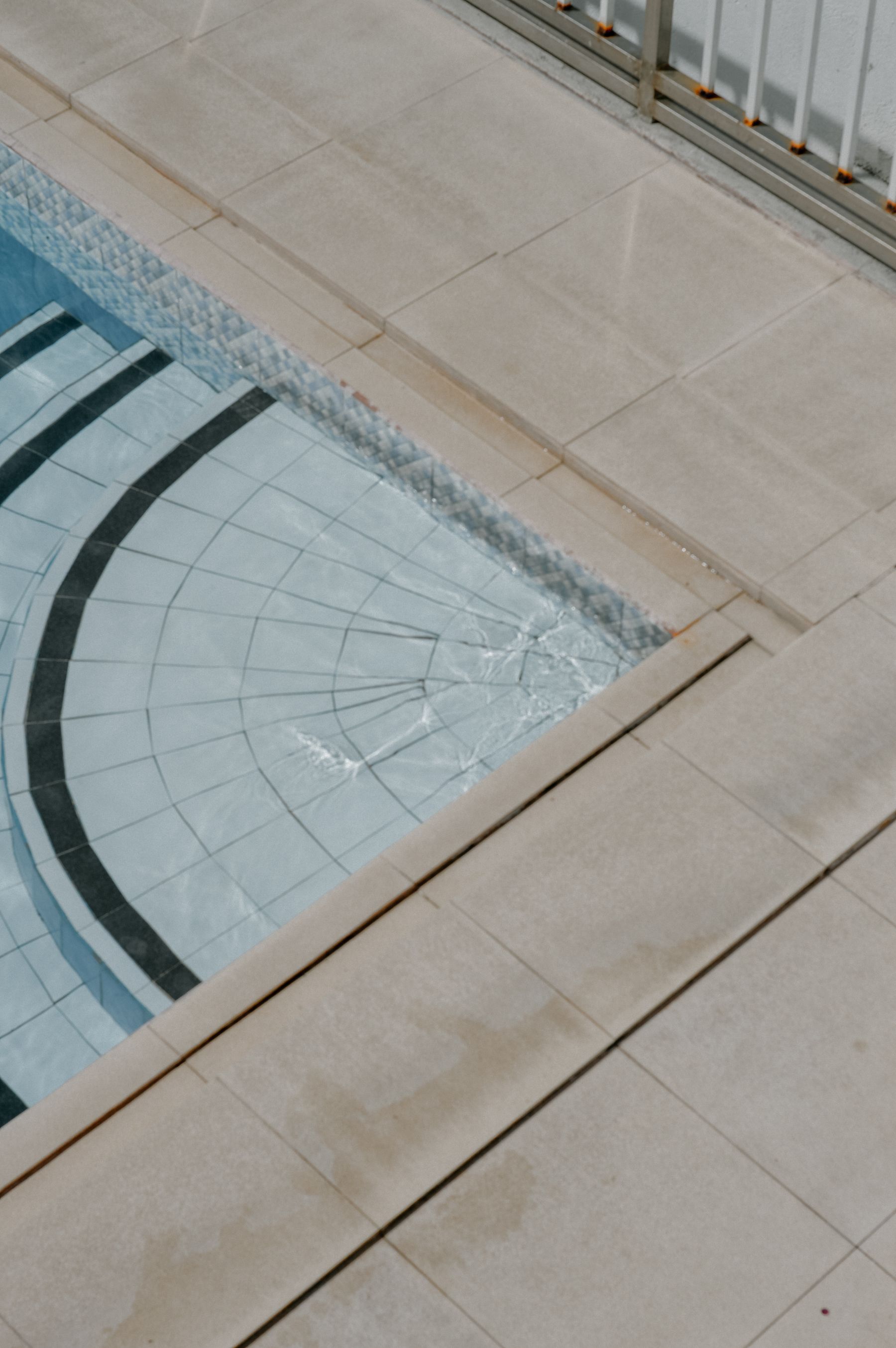
REFERENCE PHOTOGRAPH · PALE TILED POOL SURROUND WITH A RAISED EDGE
0 MM · SURFACE
Slip resistance: what the rating means underfoot
In Australia, tile slip resistance is commonly reported as a P rating from a wet pendulum test, running from P0 to P5. The higher the number, the more grip the surface has when it’s wet. Many ranges offer a textured outdoor finish alongside a smoother indoor version of the same tile.
Choose based on how the area is used. A covered alfresco that gets the odd splash has different needs from a pool surround walked barefoot and wet all summer, or a step where a foot lands at an angle. Check the rating on the product specification, not just the name of the finish.
TECHNICAL NOTE
More grip also means more texture for dirt to settle into, so the surface takes more cleaning. On pool surrounds and steps that trade-off is worth making. On a covered patio, a mid-range rating may suit everyday use better.
BELOW THE SURFACE
Four things an outdoor tile has to survive
TILE BODY
UV and frost stability
ADHESIVE BED + JOINTS
Thermal movement and expansion joints
A north-facing deck can go from cool to hot within an hour, and the tile, adhesive and slab all expand at different rates. Movement joints filled with flexible sealant instead of grout, placed around the edges and across larger areas, give that movement somewhere to go so tiles don’t crack or lift. An exterior-rated flexible adhesive with full coverage under each tile does the rest.
SCREED + FALLS
Drainage falls and outlet position
SURFACE TREATMENT
Sealing requirements by material
Most glazed and porcelain tiles don’t need sealing, though the grout often benefits from it. Natural stone, terracotta and some unglazed tiles usually do need sealing, and resealing from time to time, especially near chlorine or salt pools. Find out what a material needs before you choose it, not after it’s laid.
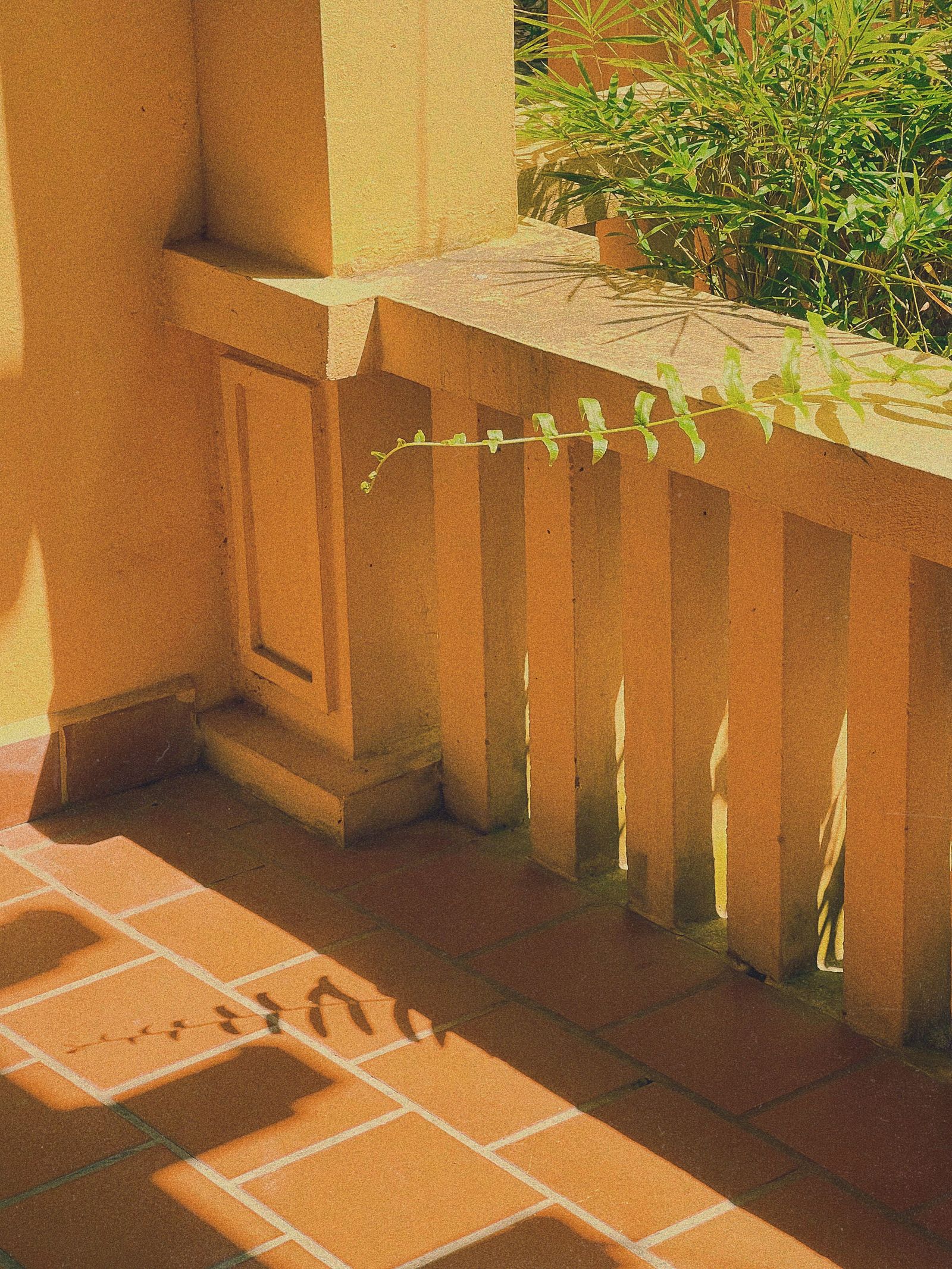
REFERENCE PHOTOGRAPH · TERRACOTTA BALCONY FLOOR WITH A TILED LEDGE
THRESHOLD · INSIDE TO OUT
Matching indoor and outdoor floors across a threshold
Running one floor from the living room out to the patio makes both spaces feel bigger. Plenty of porcelain ranges come in an indoor finish and a textured outdoor finish, so the colour carries through the door and only the grip changes.
The hard part is getting the levels right. The outdoor surface has to fall away from the building, and the door sill has to be protected from water running back in. Depending on the site, that could be a small step down, a grated channel at the threshold, or careful screeding that keeps the joints continuous while the outside starts to fall. Setting out the grout lines from the doorway keeps the pattern reading as one floor.
IN USE
Realistic upkeep around pools, patios and steps
Pool surrounds
Chlorine and salt leave residue on tiles and grout. Rinse the surround with fresh water often, check the sealant along the coping, and reseal porous materials once water stops beading on the surface.
Patios and alfresco areas
Sweep before you wash so grit doesn’t scratch the surface. A mild detergent handles most marks. Clear leaves out of the outlets before winter rain so water drains along the falls instead of pooling.
Steps
RELATED READING