Home  ·  Services  ·  Balcony Tiling

07 · BALCONY TILING · MALVERN

Balcony tiling built around the fall to the outlet


Exposed balconies, terraces and upper-level decks across Malvern, Malvern East, Armadale, Toorak and South Yarra — where the water has to leave the surface before it finds a way into the room underneath.
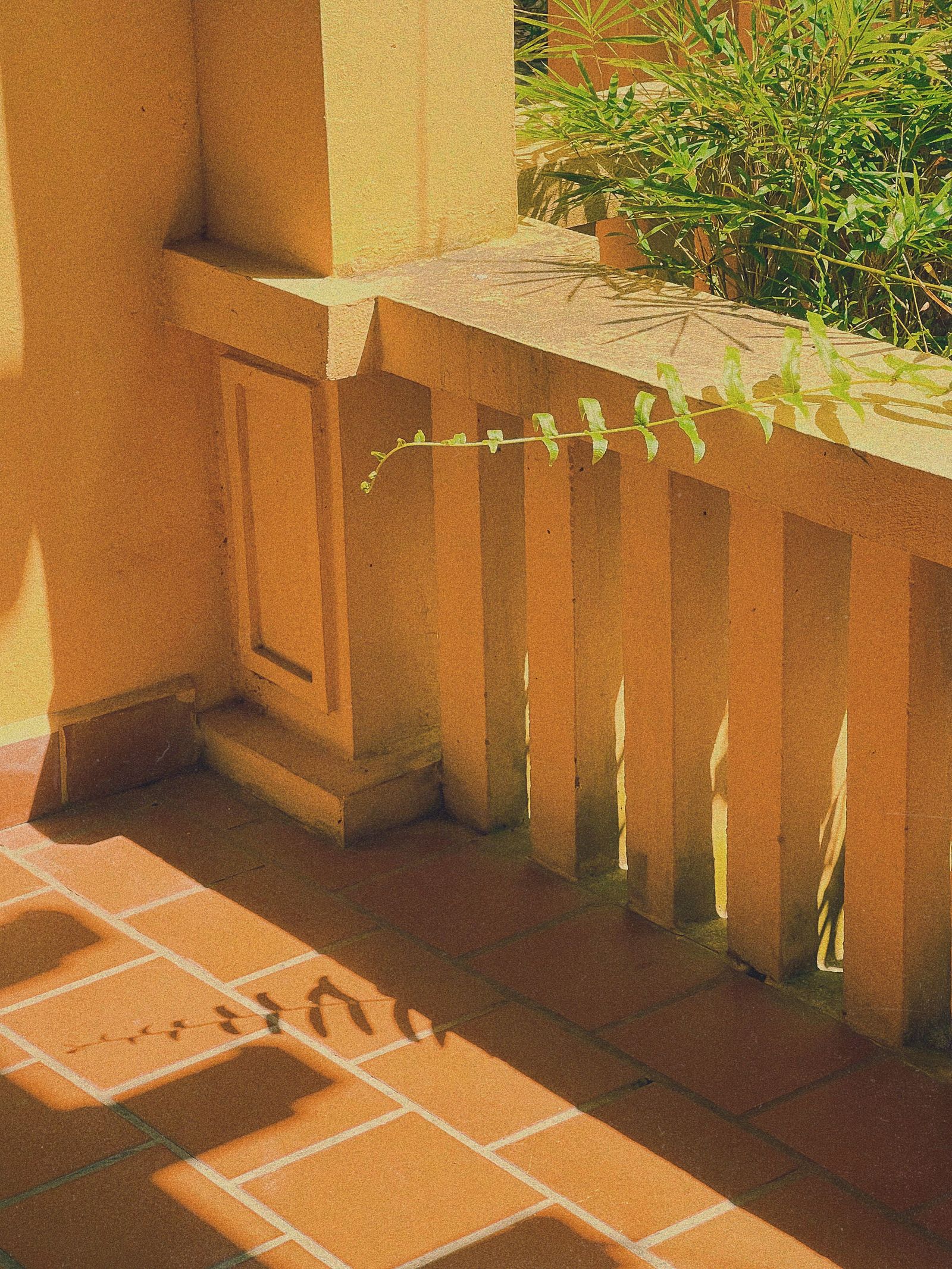
Sunlit outdoor balcony with terracotta floor tiles, a tiled ledge, wooden railing and surrounding greenery.

Reference photograph: terracotta balcony tiles meeting a tiled ledge and timber railing — the junctions that decide whether the surface stays dry underneath.

0 mm · SURFACE · WORKING BACK

What has to be right before a tile is laid

A measured fall to the outlet, formed in the screed rather than chased out of the adhesive bed.
A substrate that is sound, dry and primed for an external membrane system.
The outlet and any overflow dressed and sealed into the membrane, not laid over it.
A door threshold detailed so the finished balcony sits below the internal floor.
Upstands carried high enough at walls, ledges and balustrade fixings.
Movement joints planned at the perimeter and across long runs before set-out.
An external-grade adhesive and a tile chosen for weather, not for a showroom floor.

SUBSTRATE · EXPOSURE

A balcony is a wet area with the weather left on it

A shower runs for a few minutes a day and then dries. A balcony holds rain for hours, bakes in afternoon sun, drops twenty degrees overnight and moves every time it does. The same detail that quietly copes indoors — grout taken tight into a corner, a membrane stopped short of the door, a fall that is almost right — fails outdoors within a few seasons.

Most balconies we are called to look at are not leaking because the tiles are bad. They are leaking because water has nowhere to go, or because it reached the slab through a junction that was never sealed. Fixing the detail costs a fraction of repairing the ceiling below it — and it belongs with the waterproofing, not with the grout.

SECTION THROUGH A BALCONY

Read down the page and you read down the build-up, slab to grout line.

STRUCTURE

Slab and deck

We check what we are building on: concrete, compressed sheet or timber framing, and whether it is sound, dry and stiff enough to carry tile. Preparation decides the finish outdoors more than anywhere else.

FALLS · SCREED

The fall to the outlet

The grade is formed in a bonded screed so water moves in one direction and keeps moving. Flat sections, dead corners behind planters and falls that stop short of the drain are where ponding starts.

MEMBRANE

External waterproofing

An exterior-rated membrane, primed, bond-broken at moving junctions and built to thickness over two coats, then left to cure. It runs up the walls, over the ledge and into the outlet before anything is bedded on it. See Waterproofing.

DRAINAGE · THRESHOLD

Outlet, overflow and the door

Drains are sealed into the membrane and kept clear of the tile edge so they can be cleaned. The threshold is set down from the internal floor and flashed, because a blocked outlet in a storm should spill outward rather than under the door.

MOVEMENT · TILE

Joints, adhesive and grout
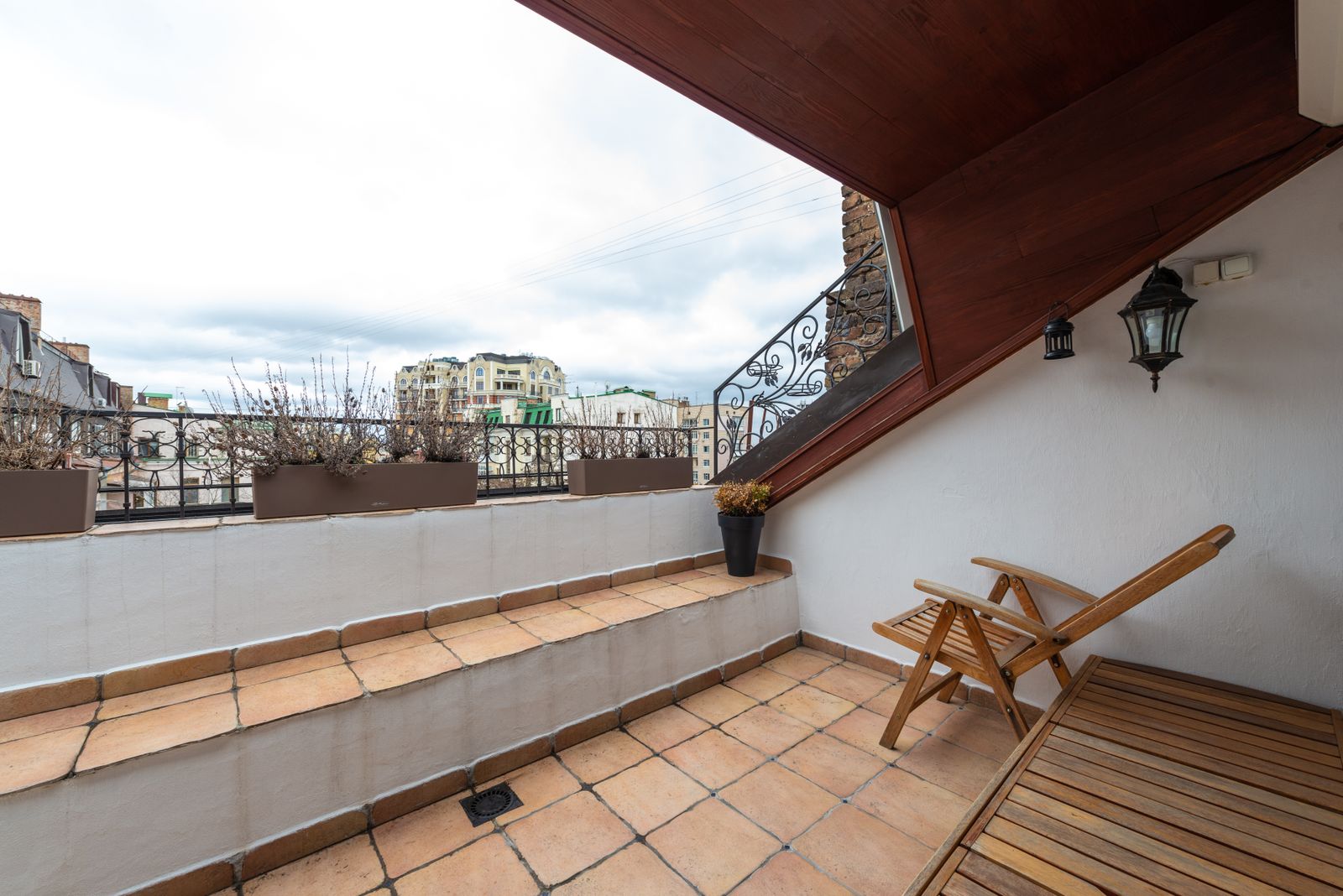
Perimeter and intermediate movement joints are filled with sealant, not grout, so thermal movement has somewhere to go. Tiles are fixed in a full external adhesive bed with no voids to hold water, then grouted and the joints sealed. Cracked or drummy work on an older balcony is covered under Tile Repairs.

Reference photograph: a terrace where planters, steps and furniture sit permanently on the surface. Every one of them is a place water collects, so the falls and the joints have to be planned around them, not after them.

0 mm · SURFACE · SELECTION

Choosing a tile for an exposed balcony

Three checks, in the order they rule a selection in or out.

01 · GRIP

Slip rating first

An exposed balcony is wet, often in shoes, sometimes on a step. We steer selections toward tiles rated for external use and warn when a beautiful polished finish is going to be a problem in July.

02 · STABILITY

Weather, not just wear

Low water absorption, UV-stable colour and resistance to freeze-thaw matter more outdoors than hardness ratings do. Choosing outdoor tiles for Melbourne conditions goes through it in detail.

03 · FORMAT

Size against the fall

Big panels look calm but resist a grade and need a flatter bed. Where a large format is the right answer, it is laid the way Large Format Tiling describes; where it is not, a smaller module follows the falls more honestly.

QUESTIONS

Balcony questions, answered

Three things we are asked on nearly every balcony inspection.

Can you tile over an existing balcony?

Sometimes, but only when the existing surface is sound, bonded and already draining properly. Overlaying adds height at the door threshold and buries whatever is failing underneath. If the falls are wrong or the membrane is suspect, removing the old surface and starting at the slab is the cheaper decision over the life of the balcony.

Why does water sit on my balcony after rain?

Ponding is a falls problem, a blocked outlet, or both. Standing water finds every weakness in a grout joint and keeps working at it, so it is worth tracing before it becomes a leak. Related outdoor surfaces at ground level are covered under Outdoor Tiling.

What does a wet ceiling below the balcony mean?

Usually that water has passed the membrane — at the outlet, the threshold, a balustrade fixing or a perimeter upstand — rather than through the tiles themselves. It is the same diagnostic logic we use on Leaking Shower Repairs: find the path first, then decide between a detail repair and rebuilding the build-up.

NEXT STEP

Tell us what the balcony is doing

Send the size, the level it sits on, what the surface is now and where the water is going. Photographs of the outlet and the door threshold usually answer half the questions. Request a quote, or use the contact page for phone, email, service area and hours.