OUTDOOR TILING · MALVERN
Outdoor tiling in Malvern, laid for weather underfoot
Slip rating chosen for bare wet feet rather than a dry showroom floor. Falls set away from the building. External membranes, adhesives and grouts that tolerate sun, rain and movement across a season.
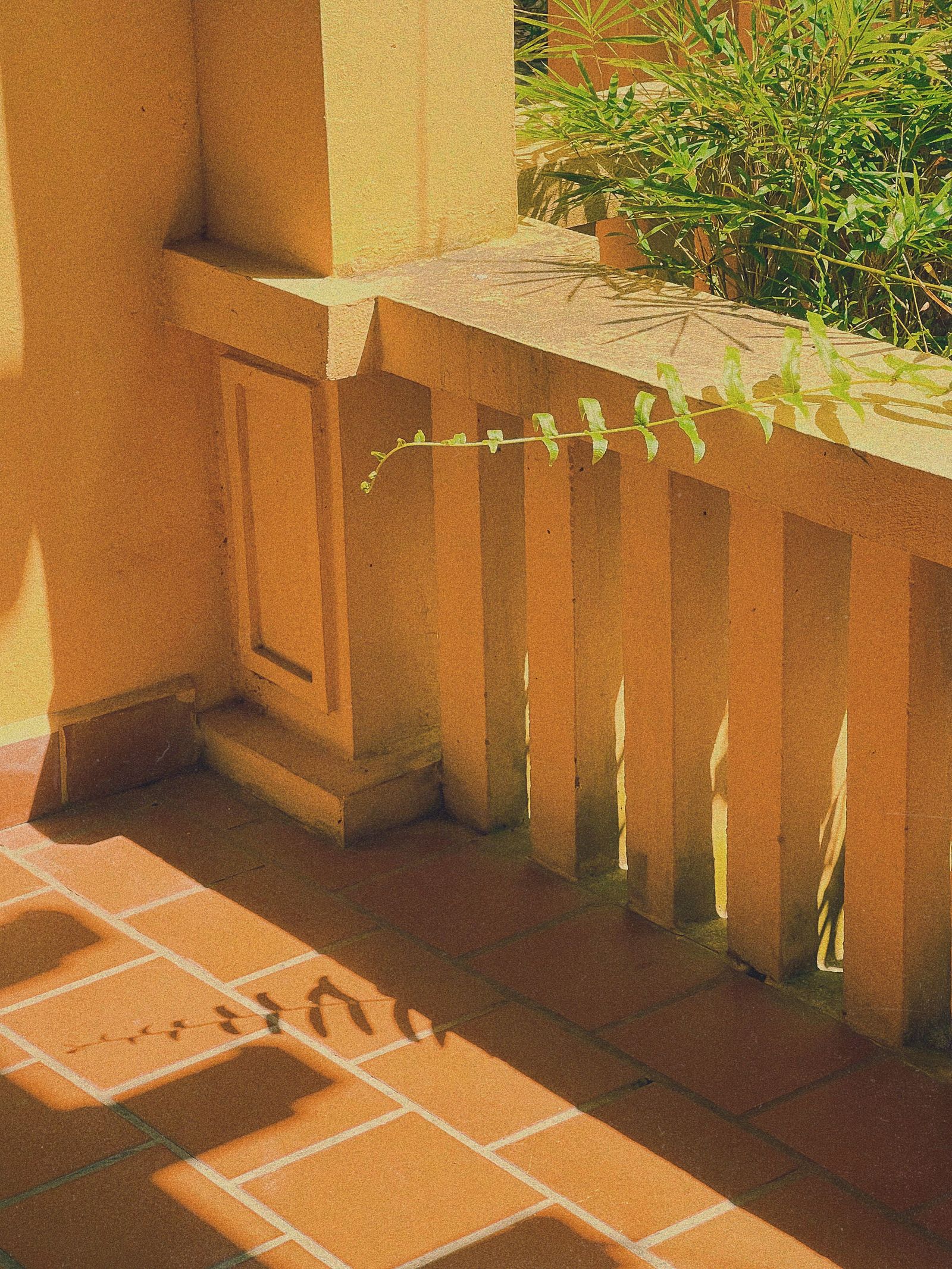
TERRACOTTA · BALCONY — floor tiles running up to a tiled ledge and timber railing, in full sun.
08
OUTSIDE · SECTION
Patios and courtyards
Pool surrounds
Paths and step treads
Thresholds and entries
Malvern, Malvern East, Glen Iris, Caulfield North and Carnegie. Residential and small commercial.
0 mm · SURFACE
What changes once tiling leaves the house
Outside, the tile stops being only a surface and becomes part of the drainage.
An interior floor has to be flat, sound and set out well. An outdoor floor has to do all of that and then shed water, take direct summer sun, cool down overnight, and be walked on wet and barefoot. Each of those demands is answered before any tile is cut: the fall built into the slab or screed, the membrane under it where one is required, the adhesive bed behind the tile, and the position of the joints that let a large field expand without lifting.
This is why an outdoor quote reads differently to an indoor one. The tile is often the smallest variable; the substrate, the falls and the perimeter detailing decide how the area behaves in its third winter.
01 · UNDERFOOT
Slip resistance
02 · MATERIAL
UV and frost stability
03 · BED
External adhesives and grout
Exterior beds are built solid and combed in one direction, with tiles back-buttered so there are no voids for water to collect in. Grout is chosen for weather and repeated washing rather than colour alone.
04 · PERIMETER
Joints and falls

Reference photograph: a wide terrace laid in blue-and-white patterned tiles, edged by decorative balustrades. Across an open field like this, the pattern makes every joint line part of how the whole floor reads.
THRESHOLD
Where the inside floor meets the outside one
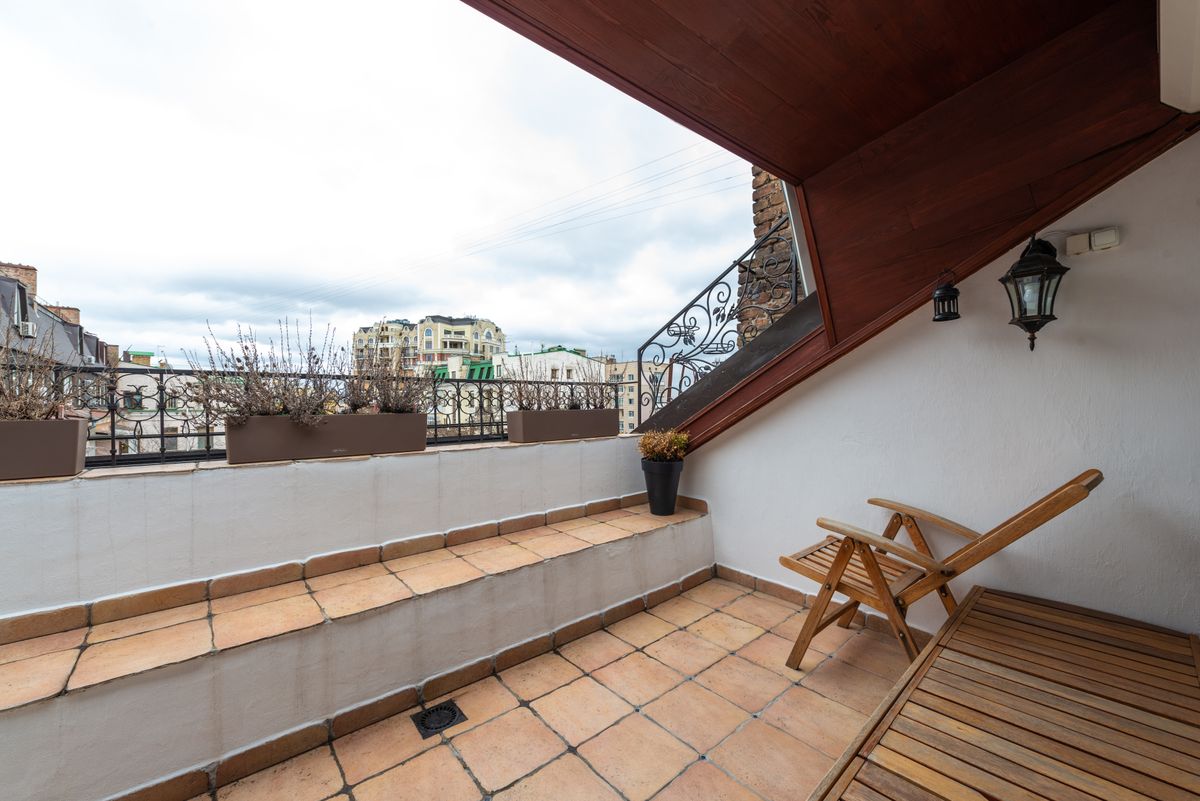
Reference photograph: a covered rooftop terrace with terracotta floor tiles, raised steps and planters, set beside railings and wooden outdoor furniture.
SUBSTRATE · A
Tiling onto a concrete slab
A sound slab is the best base available. It is checked for fall, for cracking and for curing age, then levelled or screeded where the fall is flat or uneven. Existing control joints are carried up through the tiling instead of being bridged, and the surface is primed so the adhesive bonds rather than skins over dust.
SUBSTRATE · B
Tiling over pavers or old tiles
QUESTIONS
Asked before we start
Do outdoor tiles need sealing?
Porcelain does not — it absorbs too little water for a sealer to do much. Natural stone such as travertine, bluestone or granite does, both when new and periodically afterwards, and the product depends on the stone and how much sun and splash the area takes.
What if there is nowhere for the water to go?
Then drainage is part of the tiling scope, not an afterthought. A courtyard hemmed in by walls usually needs a strip drain or a grated point outlet, with the screed shaped to feed it. Pooling water is what stains grout, grows moss and makes an area slippery in winter.
How much cleaning does it take?
Less than most people expect, if the falls are right. Hosing and a stiff broom handles leaf litter and dust; a textured surface holds a little more, which is the trade for grip. Joints laid to the correct width and finished properly are what keep maintenance to washing rather than repair.
NEXT
Tell us what the area has to handle
Further reading: Choosing Outdoor Tiles for Melbourne Conditions · Porcelain vs Ceramic: Choosing Per Room