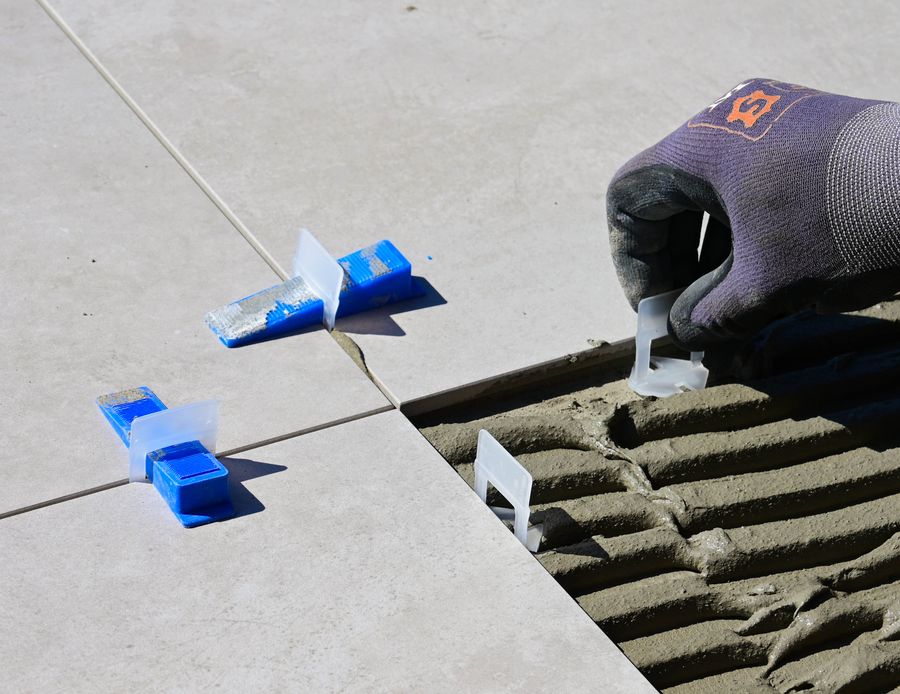
The joint is the narrowest part of a tiled surface and the first part to give up.
09 · REGROUTING · MALVERN
Regrouting in Malvern: new joints in sound tilework
Failed, stained and crumbling grout raked out to depth, the joint cleaned and dried, then refilled in a matched or deliberately changed shade — with perished silicone replaced at every movement junction.
Showers, bathroom floors, laundries, splashbacks and tiled living areas in Malvern, Malvern East, Armadale, Toorak, Glen Iris and Prahran. Residential and small commercial.
0 mm · SURFACE
What regrouting fixes, and what it only postpones
Grout is the sacrificial part of a tiled surface. It wears, stains and eventually breaks down, while the tiles either side of it are often still perfectly sound.
Where the tiles are firm and the substrate behind them is dry, regrouting is the sensible repair. Old grout is cut out rather than skimmed over, so the new material has real depth to bond into — a thin smear across a tired joint lifts within months and takes the surrounding grout with it. Once the joints are refilled and the silicone renewed, a bathroom that looked finished reads as maintained again.
It will not solve a failed wet-area membrane · drummy or lifting tiles · movement cracking straight through tiles and joints · water escaping past a poorly formed floor waste
GROUT · MATERIAL
Cement or epoxy
Both are used on Malvern jobs. The choice follows the room, the joint width and how the surface gets cleaned, not a preference.
Cement-based
Forgiving to work, easy to colour-match and straightforward to repair again later. It is slightly porous, so it takes on staining in a busy shower and benefits from sealing. Most domestic walls, floors and splashbacks are finished this way.
Epoxy
Dense and non-porous, so it resists staining and chemical cleaning — useful behind a cooktop, in a heavily used shower or in small commercial wet areas. It is less forgiving to install, slower to work and costs more in both material and labour.
01 · RAKE
Cut the old joint out
Grout removed to depth with a rake or oscillating blade, tile edges protected, old silicone stripped back entirely rather than sealed over.
02 · CLEAN
Vacuum and dry
Dust vacuumed from every joint and the surface left to dry. Anything loose found at this stage is dealt with before grouting, not after.
03 · FILL
Grout and tool
New grout worked fully into the joint, struck to a consistent profile, then washed back in stages so no haze is left sitting on the tile face.
04 · SEAL
Silicone, then cure
Internal corners, floor-to-wall junctions and screen edges siliconed in a flexible joint — then left alone while grout and sealant cure.
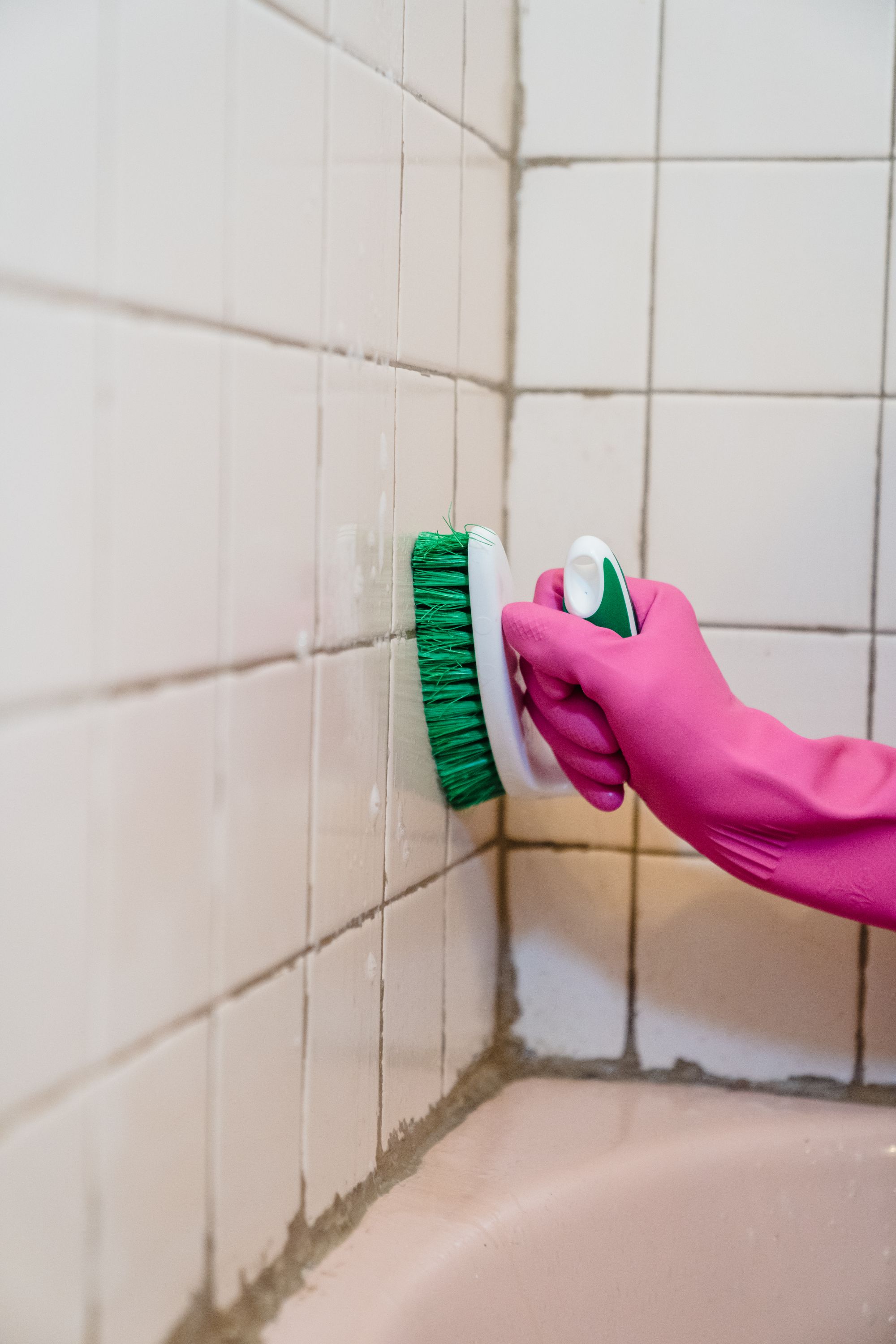
Grout lines between white wall tiles being scrubbed back. A joint is cleaned before anyone decides whether it needs regrouting, and before a colour match is judged. Grout that stays stained after a proper clean is usually ready to be cut out.
ASKED
Questions about regrouting
Can you match the existing grout colour?
Usually close, occasionally exact. Grout that has been in a shower for years has shifted from its original shade, so matching is done against a cleaned joint rather than a colour chart. Where a convincing match isn’t available, it is better to change the colour across the whole surface than to leave a patch that announces itself.
The joints go black again weeks after cleaning. Will regrouting stop it?
How long before the shower can be used again?
Grout and silicone both need to cure before they are wet, and the window depends on the products used, the joint width and how warm and airy the room is. You’ll be told the actual stand-down time for your job on the day rather than a number guessed in advance. Planning around a second bathroom for a day or two is sensible.
How long should a regrout last?
NEXT