GUIDE · TILE REPAIRS · DIAGNOSIS
Drummy, cracked or lifting tiles: reading the cause before the repair
A failed tile is a symptom. The hollow sound, the crack or the lifted edge is simply where a problem underneath finally reached the surface. Read it correctly and the repair lasts. Swap the tile without reading it and the same fault usually comes back, often right beside the new one.
A homeowner’s guide to floors and walls in Malvern and nearby suburbs, working from the surface down.
READING ORDER
The tap test
TILE + JOINT
What a crack pattern says
PERIMETER + SUBSTRATE
Movement over time
DECISION
Repair, relay or replace
0 MM · SURFACE
Start with a tap test
A tile that sounds hollow when tapped is called drummy. It usually means the adhesive under it never made full contact, or it has let go of the tile or the surface beneath. Drummy tiles can look perfect for years. They crack once a point load, like a chair leg, a dropped pan or a heel, lands on the unsupported part.
02 Work in a grid, testing the centre and each corner of every tile, and compare against tiles you know are sound.
03 Mark hollow tiles with painter’s tape. The shape the tape makes matters more than the number of tiles.
TECHNICAL NOTE
A hollow corner or two often just means patchy adhesive coverage from when the tile was laid. A drummy patch that keeps growing, or a hollow run in a straight line, points past the adhesive to movement in the layer below.
TILE + JOINT
What a crack pattern says about the layers below
Where a crack runs, and whether it stops at the grout line, tells you which layer failed.
A straight crack across several tiles
A crack that carries on through the grout and into the next tiles is rarely about the tiles. It usually follows a crack in the slab or screed, a sheeting joint or a timber floor flexing below. Replacing the tiles alone just gives the crack a fresh surface to come through.
One cracked or chipped tile
If the damage stops at that tile’s own edges, look for impact or a void underneath. A chip from a dropped object is surface damage. A crack through a tile that also sounds hollow usually means it cracked over an empty pocket in the adhesive. Both are good candidates for a careful spot repair.
Lifting or tenting in the field
Tiles that rise into a ridge, often in a sunny room or out in the open, have usually run out of room to expand. The floor pushes against the walls with nowhere to go, so it pops up in the middle. The fix has to include room for movement, not just adhesive.
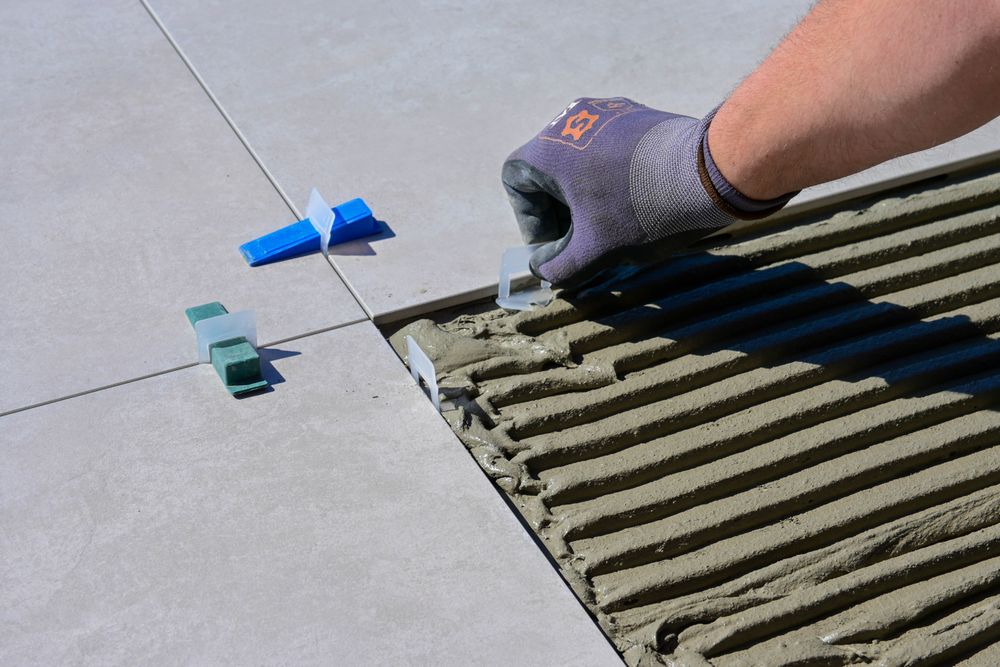
REFERENCE PHOTOGRAPH · COMBED ADHESIVE BED BEFORE THE TILE
PERIMETER + SUBSTRATE
Why perimeter and movement joints matter, and how movement shows itself
Every tiled surface moves a little with temperature, moisture and the building itself. Flexible joints at walls, at changes of plane and across large areas take up that movement. Where they were left out, or filled with hard grout, the stress goes into the tiles instead.
Signs that build up over months
— A drummy patch that is bigger each time you test it
— Silicone at wall junctions tearing or pulling away
— Edges that catch the foot where tiles used to sit flush
DECISION
Spot repair, section relay or full replacement
Spot repair
This suits isolated tiles with a local cause. The grout is cut out, the tile lifted without disturbing its neighbours, the old adhesive cleaned back, and a new tile bedded with full coverage.
Section relay
When a drummy or cracked area follows a line or a zone, that section is lifted, the surface below is checked and corrected, and movement joints are added where they were missing.
Full replacement
Matching is often what decides it. Tiles get discontinued, and the same product can vary in shade from batch to batch. Replacements may also sit at a slightly different height. If you’re having new tiles laid, keep a box of spares from the same batch, labelled and stored somewhere dry. Those few tiles can mean a small, invisible repair later instead of a relay.
FURTHER
Where to go from here
Floor Tiling When relaying over a corrected surface is the better answer
Regrouting For failed joints over tiles that are still sound
Preparation Decides the Finish Substrate checks, levelling, priming and movement joints