ON THIS PAGE · BY LAYER

SUBSTRATE
Before you start
PRIMER + MEMBRANE
Wet areas
TILE + GROUT
Materials
FAILURE
Repairs
ENQUIRY
Working with us
Home  ·  FAQs

QUESTIONS · SURFACE TO SLAB

Tiling questions answered: process, timing and materials


Most tiling questions come back to the same place: what happens under the tile before anyone sees it. These answers follow the order a job runs in. They start with planning and preparation, move through the wet-area layers, then cover materials, repairs and how to get in touch. Each answer links to the service page or guide that goes into more detail.

For homes and small commercial spaces in Malvern, Malvern East, Armadale, Glen Iris and the suburbs around them.


SUBSTRATE · BEFORE A TILE IS CUT

Before you start

What is set-out, and why does it matter?

Set-out is the plan for where every joint will land. It fixes where the first full tile starts, how the cuts fall at the edges, and how the lines relate to the floor waste, a niche, a window or a benchtop. Doing it first means no thin slivers at the doorway and no joints wandering off a feature wall. It’s one of the preparation steps in Preparation Decides the Finish, and it’s part of every Bathroom Tiling job.

How many tiles should I order?

Order enough for the measured area plus extra for cuts and breakage. You’ll need more extra for diagonal or herringbone patterns, for small rooms with lots of corners, and for large format panels, where one broken piece is a lot of surface. It’s best to confirm quantities once the set-out is known. You can raise it when you request a quote.

Should I keep spare tiles?

Yes. Keep a few unopened tiles from the same batch, and write down the product name and batch code. Shades vary between production runs and ranges get discontinued. Having spares is the simplest way to make a future tile repair blend in.

What happens to the existing surface?

First it gets checked for flatness, bond and moisture. Sometimes a sound floor in a dry area can take new tiles once it’s cleaned and primed, as long as the extra height works at doors and joinery. Other times it has to be removed and the substrate levelled or screeded first. The Floor Tiling page explains the levelling work.

PRIMER + MEMBRANE

Wet areas

The layer that decides whether a shower lasts.

What does the membrane actually do?

Tile and grout aren’t waterproof on their own, because water gets through joints and fine cracks. The membrane is what keeps that water out of the structure. It goes over a primed, prepared substrate, runs to the floor waste and turns up the walls. The Waterproofing page walks through the sequence.

Why does waterproofing need cure time?

A liquid membrane goes on in coats. Each coat has to reach the thickness and cure set by the manufacturer before the next coat, and before any adhesive or tile goes on top. If it’s rushed, it can stay soft, develop pinholes or lose its bond under the tile bed. Cure time depends on the product, the temperature and the humidity, so it gets planned into the job, not guessed. Read more in Bathroom Waterproofing: The Layer You Never See.

Can new tiles go over old shower tiles?

In a shower recess, it’s rarely the right call. The old membrane stays hidden, so its age and condition are unknown, and extra layers push the floor up against the waste and the screen. When a shower is redone properly, it’s stripped back to the substrate, prepared again and given a new membrane. That’s the approach behind Bathroom Renovation Tiling.

When can I use the shower after a repair?
That depends on the work. New grout, silicone and any membrane repair each need to cure before they get wet, and the time varies with the product and the conditions. Ask before you turn the water on. For the wider picture, see Leaking Shower Repairs.
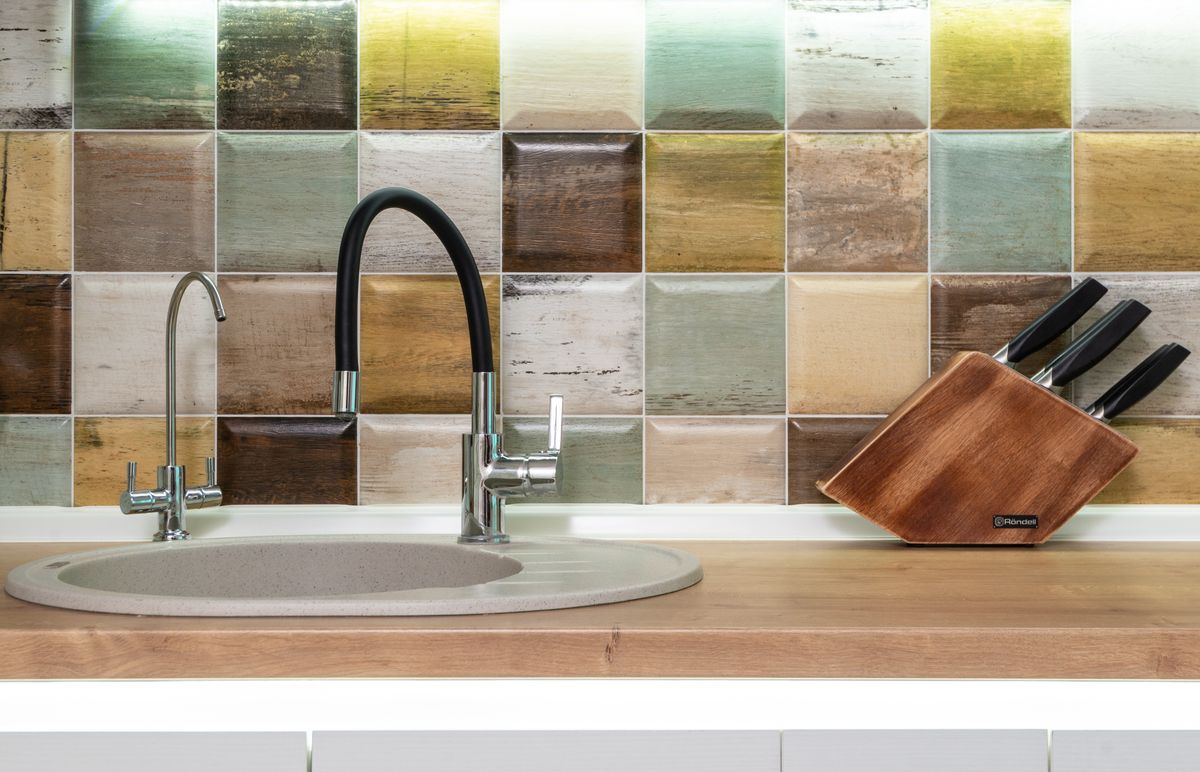
Finished kitchen backsplash of rustic-effect rectangular tiles in cream, green, brown and ochre tones, with a sink, taps and knife block.

REFERENCE PHOTOGRAPH · RUSTIC-EFFECT WALL TILES ON A FINISHED KITCHEN SPLASHBACK


0 MM · TILE + GROUT

Materials

Porcelain or ceramic?

Porcelain is denser and absorbs less water, so it suits floors, wet areas and outdoor spaces. It’s also harder to cut and drill. Ceramic is lighter and easier to work, which often makes it a good choice for walls and splashbacks. The full comparison is in Porcelain vs Ceramic: Choosing Per Room, and there are floor-specific notes on the Floor Tiling page.

Which grout should I choose?

Cement-based grout is the everyday choice for most walls and floors, and it comes in a wide range of colours. Epoxy grout resists stains and chemicals better, which helps behind a cooktop or on a busy floor, but it’s harder to apply. Internal corners and changes of plane take flexible silicone, not grout. See Regrouting and Kitchen Splashbacks.

What slip rating do outdoor tiles need?

Tiles are tested and rated for slip resistance. A wet, exposed surface like a patio, pool surround, balcony or set of steps needs a higher rating than an indoor floor that stays dry. Check the rating on the specification sheet, not just the showroom sample, and think about how easily the texture will clean. There’s more in Choosing Outdoor Tiles for Melbourne Conditions and on the Outdoor Tiling page.

FAILURE · READ FROM THE SURFACE DOWN

Repairs

Why does a tile sound hollow when I tap it?

A drummy tile has lost contact with its adhesive, or never had full coverage underneath. One hollow tile in a quiet corner can often just be watched. Hollow spots that spread, or come with cracks and lifting edges, point to movement or a failing bond that should be looked at. Drummy, Cracked or Lifting Tiles: Reading the Cause explains the signs, and Tile Repairs covers the fix.

My tile range is discontinued. Can it still be repaired?

Often, yes. Start with any spares left over from the original job. If there aren’t any, a close match can sometimes be found. Another option is to take a tile from a hidden spot, such as under an appliance or behind a vanity, and fill that gap instead. If nothing blends in, a deliberate contrast strip can look like a design choice rather than a patch.


Should I regrout or rebuild?

Regrouting suits joints that are cracked, stained or crumbling, as long as the tiles are still firmly bonded and no water is escaping. Watch for musty smells, lifting skirtings, stains on the other side of the wall or loose tiles in the shower. Any of these can mean the membrane has failed, and new grout would only hide it. Read Regrouting: When It Works and When It Only Hides the Problem and Leaking Showers: Early Signs and What They Mean. Then see Regrouting or Leaking Shower Repairs.

ENQUIRY

Working with us

What should an enquiry include?

Describe the room or area and what you want done, or what has gone wrong. If you’ve already chosen tiles, mention the product and size. If you’re dealing with a leak or a failure, note where the signs show up. Start at Request a Quote.

Do you take on small commercial work?

Yes. Tiling Malvern works in homes and in small commercial spaces such as shopfronts, consulting rooms and amenities. Both get the same preparation, waterproofing and finishing sequence. You can browse all tiling services or read about how we work.

Which suburbs do you cover?

Our work is centred on Malvern, Victoria. We also cover neighbouring suburbs, including Malvern East, Armadale, Toorak, Glen Iris, Kooyong, Prahran, South Yarra, Caulfield North and Carnegie. See Service Areas, or get in touch if you’re just outside them.

0 MM · SURFACE

A question about your own job?

Every tiled surface sits on a different substrate, with its own history. Tell us about the room, what’s underneath if you know, and what you’d like it to become.

Request a quote  ·  or send a message through the contact page